


Property law is undergoing its biggest transformation in decades. 2025 saw the Renters’ Rights Act receive Royal Assent and a proposed upwards-only rent review ban announced for commercial tenancies. Now in 2026, implementation begins — with Section 21 abolition in May, business rates changes in April, and building safety reforms rolling out across the year.
Whether you own property or are a tenant pursuant to a lease, understanding these changes now means you can plan strategically, rather than reactively, when deadlines arrive. This article comprehensively breaks down key changes to property law in 2025 as well as what you need to prepare for in 2026.
2025: The Year Property Law Changed Direction
Last year brought a wave of announcements, legislation, and legal challenges that will shape property ownership and tenancies for years to come. Here is what you need to know about the key developments.
The Renters’ Rights Act Became Law
After years of debate, the Renters’ Rights Act 2025 finally received Royal Assent on 27th October 2025. This is the most significant reform to residential lettings since the Housing Act 1988, and it will fundamentally change how private tenancies work in England.
The Act will abolish Section 21 “no fault” evictions and assured shorthold tenancies, replacing them with assured periodic tenancies. In simple terms, tenants gain greater security because landlords will no longer be able to evict them without giving a valid reason.
The government published its implementation roadmap at the end of 2025, confirming that the new tenancy regime will be introduced on 1st May 2026. All existing assured shorthold tenancies will automatically convert to assured periodic tenancies with no fixed term — meaning tenants can stay as long as they continue to meet their obligations, other than in limited circumstances.
Commercial Landlords Faced an Unexpected Announcement
In July 2025, the government announced its intention to ban upwards-only rent review clauses in commercial leases in a move that caught the property industry off guard. The proposals appeared in the English Devolution and Community Empowerment Bill with no prior consultation, leaving landlords, tenants, and their advisors scrambling to understand the implications.
The British Property Federation has been actively consulting with members on potential impacts. Concerns include:
- Reduced investment appetite from both UK and overseas investors.
- Lower property valuations affecting pension funds and institutional landlords.
- Higher borrowing costs as lenders factor in less predictable rental income.
- Reduced viability for new commercial developments.

For commercial tenants, however, this could be positive news, potentially giving them more flexibility when market rents fall rather than being locked into paying above-market rates.
Leasehold Reform Hit Legal Challenges
The Leasehold and Freehold Reform Act 2024 (LFRA) received Royal Assent on 24th May 2024 with the aim of enhancing leaseholder rights and making it cheaper to exercise them. However, the vast majority of its provisions are yet to be enacted.
LFRA has faced a number of challenges to date, one of which being the freeholders issuing a Judicial Review application arguing the new valuation methods violated their property rights under the European Convention on Human Rights.
The High Court dismissed this challenge in October 2025, clearing the way for further consultation on rates. However, an appeal is expected, so the timeline remains uncertain.
In January 2025 the two year ownership requirement relating to lease extensions and acquisition of the freehold came into force.
In March 2025 changes to the Right to Manage (RTM) provisions were implemented, including an increase in non-residential floor area from 25% to 50%, meaning more buildings qualify for the RTM and a prohibition on recovery of landlord costs.
The government also published its Commonhold White Paper in March 2025, announcing the “beginning of the end for the ‘feudal’ leasehold system.” The aim is to make commonhold — a system where flat owners own the freehold to their own unit and collectively own and manage the building — the default form of ownership for new developments, replacing leasehold.
However, the draft Leasehold and Commonhold Reform Bill promised before Christmas failed to materialise.
Building Safety Reforms Continued to Develop
Following the Grenfell Tower tragedy, building safety regulation has been transformed. 2025 saw important court cases testing how far the Building Safety Act 2022’s protections extend, with two major cases now heading to the Supreme Court.
In Adriatic Land 5 Ltd v Long Leaseholders at Hippersley Point [2025] EWCA Civ 856 and Triathlon Homes LLP v Stratford Village Development Partnership and another [2025] EWCA Civ 846 the Court of Appeal held that the protections within the Building Safety Act 2022 apply retrospectively. So far, the courts have generally protected leaseholders from bearing remediation costs. The Supreme Court has granted partial permission to appeal. Its decision is awaited.
Permission to appeal to the Court of Appeal has also been granted following the Upper Tribunal decision in Almacantar Centre Point Nominee No 1 Ltd and another v de Valk and others [2025] UKUT 298 (LC), which concerned the recoverability of costs relating to unsafe cladding.

Law Commission Consultations Shaped Future Reform
The Law Commission completed its first consultation on reforming security of tenure under the Landlord and Tenant Act 1954. This legislation acts to give many business tenants the right to renew their lease when it expires.
Currently, landlords and tenants can agree to “contract out” of these protections, meaning the tenant gives up their automatic renewal rights. The consultation posed the question of whether this system should change and what alternative models would look like.
In June 2025, the Commission indicated that the current contracting out model should remain. A second consultation on technical reforms is expected in 2026.
2026: What Is Coming and When You Need to Act
With the groundwork laid in 2025, here are the key dates and changes you need to prepare for.
The Rent Review Ban: What It Means for Your Business Lease
The proposed ban on upwards-only rent reviews is making speedy progress through Parliament. At the time of writing, the English Devolution and Community Empowerment Bill is at Committee Stage in the House of Lords, meaning detailed scrutiny is underway.
What is an Upwards-only Rent Review?
If your commercial lease includes a rent review clause, it probably says your rent will be reviewed every few years (typically every five years) and adjusted to the current market rate. An upwards-only clause adds a crucial restriction: your rent can go up if the market has risen, but it can never go down — even if market rents have fallen significantly.
These clauses are common in longer commercial leases because they protect landlord income and make property investments more attractive to lenders. But the government argues they create a “one-sided dynamic” as tenants absorb all the risk of rising rents while landlords face no equivalent downside.
What is Being Proposed?
The ban would apply to leases granted or varied after the provisions come into force. Crucially, the proposal is not retrospective. This means that if your existing lease has an upwards-only rent review clause, it will remain valid until the lease expires. The government’s impact assessment refers to implementation being scheduled for 2027 or 2028, but if you are negotiating a new lease now, these changes should be on your radar.
Interestingly, leases in the retail sector (the original target of this legislation) may be least affected. This is because retail leases tend to be shorter and may not contain rent review provisions at all.

What you Should do Now
If you are negotiating a new commercial lease, consider how these changes might affect your position.
For landlords, this may mean looking at alternatives such as stepped or index-linked rent increases. Tenants may have greater flexibility however, this advantage may be tempered by the likelihood that landlords will try to mitigate their new risks — potentially through higher starting rents.
Understanding your options now will help you negotiate more effectively in the future.
Business Rates: Changes from April 2026
If you occupy commercial premises, your business rates bill may be changing. The Valuation Office Agency (VOA) has updated the rateable values of all commercial, and other non-domestic, properties in England and Wales. These future values will take effect from 1st April 2026, and for some businesses, the impact will be significant.
How Business Rates Work
Your business rates bill is calculated by multiplying the rateable value by the relevant multiplier, set by the government. Different multipliers now apply depending on your property type and value.
The Relief That is Ending
The 40% business rate relief for retail, hospitality and leisure properties introduced during the pandemic and gradually reduced since will end completely on 31st March 2026. While transitional relief will be available for businesses facing significant increases, many occupiers should expect their bills to rise.
If you have not already, now is the time to check your rateable value and calculate what your new bill might look like.
Landlord and Tenant Act 1954: What the Second Consultation May Bring
The Landlord and Tenant Act 1954 gives most business tenants the right to renew their lease when it expires, even if the landlord would prefer them to leave. The Act has been under review since 2023, and a second consultation is now expected in Spring 2026.” This “security of tenure” is valuable as it means you can invest in your premises knowing you will not be forced out at the end of your lease term.
Following the Law Commission’s confirmation that the current system will remain, a second consultation is expected in Spring 2026 focusing on technical details of how the Act might be modernised.

What Might Change?
The Commission has provisionally concluded that the minimum lease length needed to qualify for security of tenure should increase from six months to two years. If implemented, this means tenants on shorter leases would lose their automatic right to renew. For landlords, this could make short-term lettings more attractive; for tenants, it is a reason to negotiate longer terms if security matters to you.
The consultation will also examine the “contracting out” procedure (the process by which landlords and tenants agree to exclude security of tenure from a lease). The current process involves specific notices and declarations that many consider “unnecessarily bureaucratic”, so simplification would be welcomed by practitioners on both sides. It will also cover the grounds of opposition, renewal terms and where lease renewal disputes should be heard. For example, in the County Court or First-tier Tribunal.
Building Safety: Key Dates and What They Mean for You
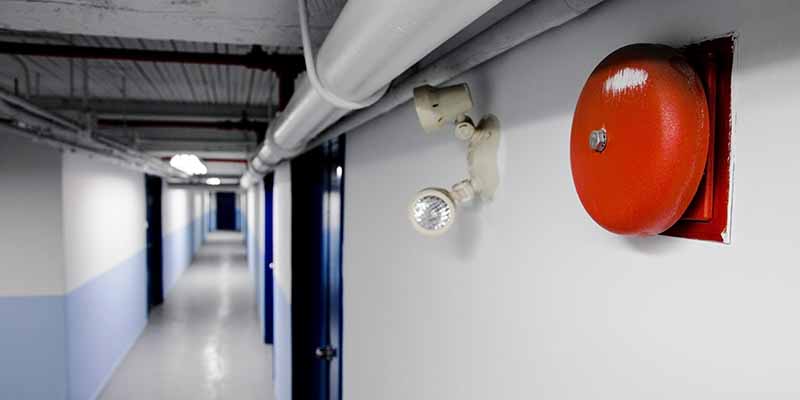
Building safety regulation continues to evolve in 2026. Here are the key developments.
Building Safety Levy from October 2026
From 1st October 2026, developers will pay a new levy on residential developments to fund remediation of building safety defects. The levy applies to developments of at least 10 homes or 30 student bedspaces — an additional cost to factor into viability calculations.
Changes to the Building Safety Regulator
The Building Safety Regulator transfers to new management on 27 January 2026, moving from the Health and Safety Executive to a new public body under the Ministry of Housing. This follows criticism of delays in approving new high-rise developments, though practical improvements may take time given existing backlogs.
Court Decisions to Watch
The Supreme Court will hear appeals on whether the Building Safety Act’s protections apply retrospectively. For leaseholders facing remediation bills, these decisions could determine whether you are protected. For landlords and developers, they will clarify your potential liability.
Fire Safety Regulations from April 2026
New regulations come into force on 6th April 2026 requiring certain high-rise buildings to have evacuation plans and identify residents needing assistance. Building owners should ensure compliance before this date.
Leasehold Reform: What to Expect
Most of the LFRA’s provisions are not yet in force, including:
- Reformed processes and valuation methodology for buying the freehold or extending a lease (potentially making it cheaper).
- A ban on new leasehold houses.
- Improved transparency relating to service charges, administration charges and insurance.
- New protections for homeowners on freehold estates.
Further consultation and secondary legislation is required in order to enact these provisions.
The Draft Commonhold and Leasehold Reform Bill
On 27th January 2026 the Government announced that “Over 5 million leaseholders and future homeowners will benefit from stronger control, powers and protections, through the draft Commonhold and Leasehold Reform Bill. Published Tuesday 27th January, the bill fundamentally rewires homeownership across England and Wales.”
Ground rents are to be capped at £250 a year, changing to a peppercorn cap after 40 years. New leasehold flats will also be banned and forfeiture is set to be abolished.
The government wants commonhold to become the default for new flats. However, existing leaseholders will also be given the opportunity to switch to commonhold, where the majority of residents agree to it.
The Ongoing Legal Challenge
While the High Court dismissed the freeholders’ challenge, an appeal is expected. The process could take several years. Although these developments are welcome news for leaseholders, significant work is required in order to implement them. As a result, there is continued uncertainty about when the reforms will actually take effect.

Residential Landlords: The May 2026 Deadline
If you are a residential landlord, 1st May 2026 should be the date circled on your calendar. We have already urged landlords to review their tenancies ahead of these changes. Here is what you need to prepare for.
What Changes on 1st May 2026?
The core reforms to private rented sector tenancies take effect on this date. This includes:
- End of Section 21 Evictions: You will no longer be able to evict tenants without giving a valid reason.
- New Tenancy Structure: Assured shorthold tenancies are abolished; all tenancies become assured periodic tenancies that roll on indefinitely.
- Reformed Possession Grounds: You can still recover your property for legitimate reasons (selling, moving in yourself, or a close family member moving in, rent arrears, or anti-social behaviour) but you will need to prove the ground applies.
- Ban on Rental Bidding: You must stick to the advertised rent and cannot accept higher offers.
- Anti-discrimination Measures: It becomes illegal to refuse tenants because they receive benefits or have children.
- Pets: Tenants can request permission to keep a pet, and you must consider it fairly.
- Rent Increases: Limited to once a year, and tenants can challenge increases they consider unfair through the First-tier Tribunal.
- Upfront Payments: Maximum of one month’s rent in advance.
What this Means in Practice
You will still be able to manage your property and recover possession when genuinely needed. But the days of ending tenancies simply because you want to change your tenant are over.
The government is publishing guidance for landlords before May 2026, including prescribed wording for tenancy agreements so make sure you are using the correct documents from day one.
Later in 2026
From late 2026, a new database of all landlords and rental properties will begin regional rollout. Tenants will be able to check whether their landlord is registered. A new ombudsman service will also launch, giving tenants a way to resolve complaints without going to court.

Court Capacity Concerns
There are some concerns about whether courts will be able to handle the proposed transition. A senior judge noted in December 2025 that a new online platform for possession claims is being built, expected to launch around the same time as the new tenancy regime. Landlords should factor potential delays into their planning.
Energy Efficiency: What We’re Still Waiting For
If you let residential property, you may need to improve its energy efficiency. The government has consulted on raising Minimum Energy Efficiency Standards to require an EPC rating equivalent to “C” by 2030, applying to new tenancies from 2028 and all tenancies from 2030.
For commercial properties, the picture is less clear. Despite promising a response “early in 2025,” the government has yet to provide updated guidance on commercial energy efficiency requirements.
We expect updates during 2026, but timelines remain uncertain. If you are planning property improvements, factoring in potential energy efficiency requirements now makes sense.
How WHN Solicitors Can Help
2026 is shaping up to be a transformative year for property law. Whether you are a business owner reviewing your commercial lease terms, a residential landlord preparing for the May deadline, or a leaseholder navigating service charge disputes, enfranchisement, or building safety concerns, early advice can save you time, money, and stress.
Daniel Long, a Director in our Commercial Property and Leasehold Litigation teams, is a leading national specialist in long leasehold dispute resolution and commercial property disputes. He acts for landlords and tenants across both sectors — from small tenant businesses to large-scale investors. WHN Solicitors is one of the few firms in the North West with expertise in this niche area.
Katie Wright, Senior Associate Solicitor and Head of Civil Litigation, leads our Clitheroe office and specialises in contentious probate and residential possession matters. With over 10 years’ experience as a qualified solicitor, Katie joined WHN Solicitors in 2019 and became Head of Civil Litigation in 2024. Her role now includes strategic oversight of the Clitheroe office as WHN continues to grow across the Ribble Valley.
Contact us today to discuss how these reforms affect your property interests. Contact Daniel Long at daniel.long@whnsolicitors.co.uk or call 0161 761 8063. Alternatively, contact Katie Wright at katie.wright@whnsolicitors.co.uk or 01200 408303.